
Chasing Jessie James
Stories From the Family Farm

The original plan for today was to continue looking at the areas and orientations of archaeological sites. We started that exploration on the family Farm and in the Big Sioux Watershed. I still plan to expand that effort to look out into other regions, but I’ve not got my homework far enough along to write that piece. Plus, the research is fun and I want to enjoy it! So that essay is not yet written.
Today’s offering is a retelling of a couple of stories that I originally heard from family members when I was growing up on the Farm. A new subscriber to this Substack recently asked about the pieces of fiction that are sprinkled in among the more wonky science essays. That reminded me about some writing that I did a number of years ago and I decided to recycle that story to bail me out of the current situation.
As the children of homesteaders, my grandparents, Daisy and George, both grew up along Kanaranzi Creek in southwestern Minnesota. During the 1930s they lived and worked and raised their family on Lone Tree Farm. In that decade there was often confusion and disagreement about who was a “good guy” and who was a “bad guy”….. sorta like the present time!
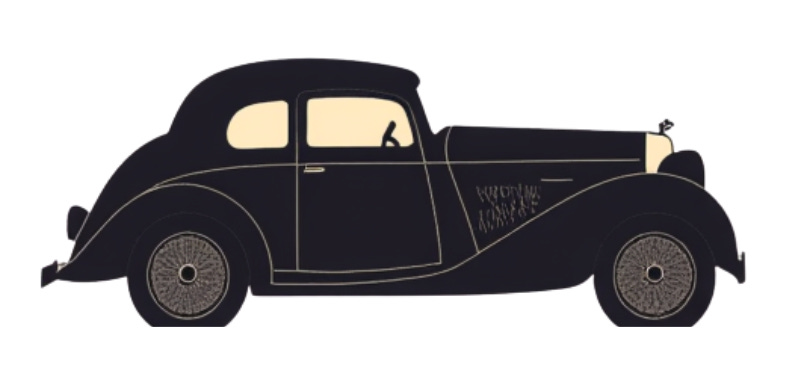
“They’ve robbed the bank!”
George and Joe saw the big black touring car speed past the barbershop just minutes before the young bank teller burst in through the door.
“They’ve robbed the bank!” the young man repeated as he tore around the porcelain pedestal sink located between the front door and the barber’s chair. “They took Ed hostage and they’re gettin’ away,” he shouted.
“I’ll get my gun,” Joe responded and ran up the stairs that led to his apartment on the second floor.
“We’ll use your car,” Joe said to George when he returned with his shotgun.
“And be careful with that thing!” George said. “If we go off half-cocked, somebody is liable to get shot.”
George was a big man who was not particularly comfortable in the confining and padded barber’s chair. He was so physically imposing and had such a calm demeanor that he rarely had to raise his voice to get people to pay attention.
In contrast, Joe the barber was an animated little man who had been talking to George about guns. Joe was an avid hunter and guns fascinated him. For George, on the other hand, guns were just tools that were sometimes needed to get some things done. Right now, the job at hand seemed to be chasing bank robbers.
“Where’s John Law?” asked George.
The young teller said, “He was drinking coffee with the crew over at the café, but his car isn’t there now.”
“Okay, I guess that does mean that we’d better follow the crooks,” George reluctantly admitted as he rose from the barber’s chair. The three men went out the door. “You keep looking for John Law,” he ordered the young teller, “and we’ll chase them in my car.”
His dark, two-door coupe raced out of town to the south toward the state line in a delayed hot pursuit. Joe stuck his shotgun out of the passenger’s window and shouted for George to drive faster.
They covered the mile to the state line in good time and pulled to an abrupt stop next to Ed. The banker who had been taken hostage was standing on the west side of the road.
“Are you alright?” George asked.
“I’m okay,” Ed said. “But, you’re lucky that you didn’t catch those guys. They’ve got tommy guns! They shot up that feed sign as a warning.”
Ed pointed to a small, bullet-riddled scrap of metal that clung to the field fence. The robbers had fired a short burst to impress the banker with their message.
“They claimed that they are going to give the bank’s money to the poor people who deserve it,” Ed grumbled.
“Come on! Come on! Let’s go!” shouted Joe.
George told Joe to be quiet, got Ed loaded into the back seat of the car, and went back to town. By then, the town constable had telephoned Iowa authorities with the hope of having the bank robbers intercepted.
On the drive back to town, the banker complained, “This damned Depression is giving people an excuse to do anything—even rob banks. ‘Steal from the rich and give to the poor.’ Those guys are no more Robin Hood than Jesse James. They’re just common criminals.
“Well, back in the day, some folks thought Jesse James was an American Robin Hood,” George reminisced.
“The radio and newspapers make the crooks look like heroes,” Joe chimed in. “But, these gangsters sure do have some foxy guns and cars. “They must spend some of their loot on those things before they give any money to the poor widows and orphans.”
####
Later, when George was back home on the farm relating all of the excitement to his wife, he had another problem to deal with. Daisy was mad! Although his large size and unassuming personality made him a natural leader, he deferred to his wife’s judgment in a remarkable number of things.
“Why on earth did you chase after those people?” Daisy wondered. “Didn’t you think about the kids and the farm? What would we have done if they had shot you instead of the feed sign?”
“I thought about that a lot on the way home and I’m really sorry,” George confessed. “Joe and I had been talking about how important guns were when people like our folks first settled around here. He’s just crazy about guns.”
Physically, Daisy was the complete opposite of her husband. She was short and somewhat frail. The hard work of a farmer’s wife wore on her. But, she had the same quiet voice and calm demeanor that also commanded respect in George.
“Well, it was a dangerous chase that you went on,” she said.
“I know. I know. I should have been more careful. Joe was shouting and jumping around waving his shotgun. But, I think one other thing that got me fired up was the story that my older brothers Carl and Fred always told about chasing Jesse James. I must have heard that tale a hundred times when I was growing up,” George said.
Daisy poured herself a cup of coffee, refilled George’s cup, and sat down at the kitchen table with him.
“I’ve heard a lot of stories about you boys growing up along the Creek, but I don’t remember hearing about Jesse James,” she said.
And, so, George told Daisy about how the Shurr boys living on the homestead encountered the James brothers….
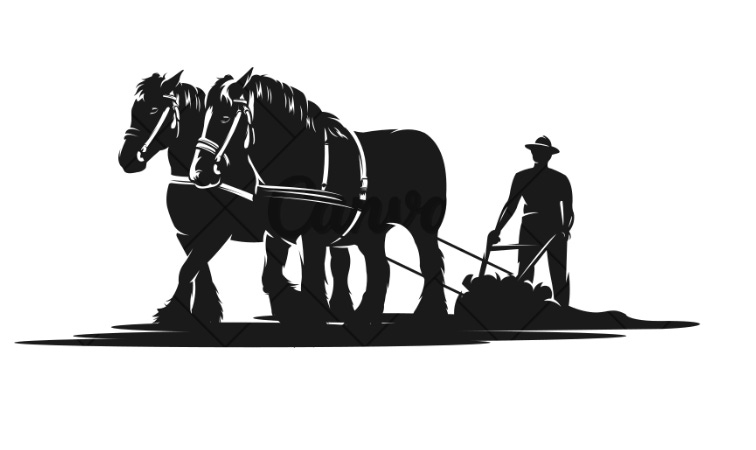
Three of the Shurr boys were plowing in the meadow on the north side of the Creek. It was a warm September afternoon and the job did not have a high priority. Dad had told them that next spring they might try planting some wheat there close to the Creek and see if it would survive the floods that sometimes hit the low areas.
The boys took turns following the team of horses behind the breaking plow, but it was slow going. Both horses were old and the three boys were not concentrating on the work. Dad always said: “One boy is half a man, two boys are a quarter, and three boys are no man at all.”
Johann the cousin and the brothers Carl and Fred were in deep discussion about the news of the Northfield bank robbery earlier in the month. Newspaper accounts described the holdup and the subsequent chase across southern Minnesota that included the shoot-out near the town of Madelia. Most of the gang from Missouri had been captured or killed. But, Jesse and his brother Frank had escaped. The gossip in the neighborhood maintained that they were headed across southwest Minnesota to get to the Big Sioux River. Their escape route would take them south along the Big Sioux and then down to the Missouri River and on to their hangout in the northwestern part of the state Missouri, near Kansas City.
The boys’ conversations repeated a familiar theme. Cousin Johann who was the oldest, bragged about capturing the outlaws to become famous. But, the two younger boys wanted to join the gang and be involved in the Robin Hood adventures. There were stories about the James boys helping elderly farmers make their mortgage payments to the bank. And, there were stories that these outlaws actually owned land in southwest Minnesota. The boys speculated that Jesse and Frank might pass through this country to get to the Big Sioux River. Kanaranzi Creek that ran adjacent to the field they were plowing, was a logical route to the Big Sioux.
About midafternoon, the youngest boy, Fred, pointed out two riders on the skyline to the north. They moved down the hill toward the Creek and crossed the newly plowed field at an angle to the furrows. Johann stopped the plow horses as the boys watched the riders leisurely approaching. Carl, who was particularly adamant about joining the James Gang, got progressively more excited.
Suddenly, he ran to the front of the standing team. He un-harnessed the outside horse on the left side. The tugs were quickly unfastened, and the horse was free from the plow. Then, he tucked up the long reins, jumped up on the old plug’s back, and took off after the two riders. Johann and Fred at first were shocked into silence, but then started shouting at Carl as he lumbered away on the plow horse.
The two approaching riders stopped when they heard the boys’ shouts. Carl was surprised at how fast his old horse was closing in on them. He had started out about a quarter mile away, but soon was close enough to see the long brown coats that the riders wore.
Meanwhile, Johann ran back from the plow to the tree where the boys had left a shotgun. They always had the gun with them to hunt rabbits and other small game. He grabbed the gun and blasted off a shot into the air away from the two riders. He said later that it was only a warning shot, but it got some unanticipated results.
The two riders veered their horses straight west, away from Carl who was getting closer. The lead horseman broke from a trot to a full gallop. The second rider held back and extended his arm back over the horse’s rump. There was a pistol in his hand.
He fired off four shots in quick succession and kicked his horse into a full gallop.
Carl pulled up sharply when he saw the pistol and heard the shots. Three bullets went wild, but the fourth grazed the horse collar on the left side. It cut a groove into the harness collar and startled both the boy and the old plow horse.
Carl watched the two riders gallop over the ridge to the west. He was shocked at how close the slug had come without doing much damage.
Johann and Fred came running and shouting to where Carl sat on the sweating old plow horse. Carl was sweating too, but he was not shouting. The three boys looked closely at the torn horse collar and speculated about what the James brothers had intended to do. They decided to go back up to the farmyard and report the excitement to Dad.
Before the Civil War, Dad’s father had sent him away from Germany to avoid military conscription. When he homesteaded on the Kanaranzi, it was only ten years after the Dakota War in Minnesota. Dad was not a true pacifist, but he did not approve of unnecessary violence. He listened to the boys’ story and made them promise not to tell Mother. They kept that promise, but discussed the incident among themselves many times over the following years.
####
“I was only about five years old at the time and I bet that I’ve heard that story told more than a hundred times,” George said. “I think the chase after Jesse James was in the back of my mind when Joe and I lit out after the bank robbers this morning.”
“Whatever became of the horse collar that was marked by the bullet?” Daisy asked with a characteristic Irish grin.
George laughed in an understanding way. “You know, it’s strange. Whenever I asked the boys to show it to me, they could never find it in the harness shed!”
Daisy picked up their empty coffee cups and put them in the kitchen washbasin. “I suppose it did seem like a way to get in on that excitement from fifty years ago,” she said. “but, you’re not a little boy anymore. You have family and farm responsibilities. You’re too old to go chasing after bank robbers or Jesse James.”
####
Graphics are from Canva’s AI Image Generator
What a delightful story about Jesse James and his brother on the family farm.