
See-Count-Dig-Think
A Possible "Recipe"from Our "World Tour"

Our “world tour” of Cahokia along the Mississippi River, Hopewell sites in the Ohio River Valley, and the “megasites” in Ukraine did have a thread running through it. The “recipe” stringing all of these big and famous archaeological sites together, relates to how the sites were identified and studied. And the title of this piece is a simplified summary: See-Count-Dig-Think. We’ll look each component in a little more detail and then head back to the Big Sioux Watershed to look at an application of one aspect of the pattern at a specific place.
The individual components are pretty straight forward activities that are routinely carried out at archaeological sites everywhere. However, the “Think” component is somewhat more unconventional and even controversial. Although the idea of an evolution of societies from “primitive” to “advanced” is widely accepted in the general public, professional archaeologists and anthropologists have moved way beyond that superficial model. Social evolution is no longer accepted as the dominant idea, although the arguments still continue. After we go back to the Big Sioux, we’ll look briefly at how those debates influence the notion of “Manifest Destiny” as it’s been applied in the American Midwest.
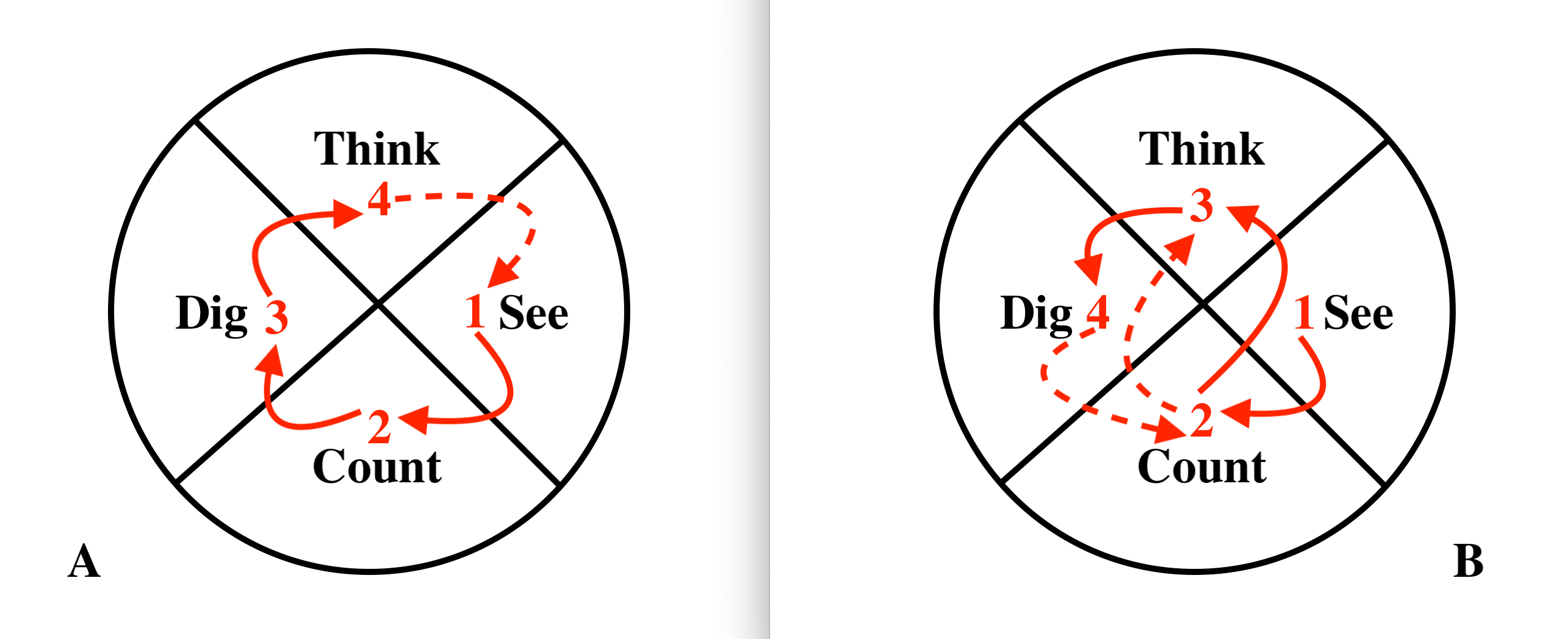
Figure 1----Diagrams illustrating the cycles of activities at archaeological sites. A) Ukraine. B) Lone Tree Farm.
The megasites in Ukraine (Figure 1-A) were mainly discovered during the Soviet era in the late 1900s. Pilots of fighter planes first “Saw” the arrangements of dwellings into neighborhoods reflected in the patterns of vegetation and soil saturation. Subsequent geophysical mapping “Counted” magnetic measurements in the soil to establish specific places to conduct excavations, i.e. “Dig”. Then the debates and interpretations (“Think”) started to synthesize the observations into ideas that might have applications in other parts of the world. The whole process began all over when the new ideas sparked new perspectives that allowed people to “See” more new things. I once had a colleague who used to say, “I wouldn’t have seen it if I hadn’t believed it”. And that’s the essence of a new cycle starting things all over again.
The cycle of archaeological work on Lone Tree Farm (Figure 1-B) has been a bit more complicated. It started out in the same way when we “Saw” artifacts eroded out of the creek banks and circular vegetation anomalies visible in the grass and in air photos and satellite images. Like the megasites in Ukraine, the next step was to “Count” geophysical measurements that documented probable cultural features. Native American Elders and keepers of traditional knowledge (“Think”) then visited the site to provide perspectives that were otherwise not available from conventional archaeological sources. With that input, excavations (“Dig”) were done and material was recovered for further radiometric dating (“Count”). That new data was then integrated into another round of interpretations (“Think”). We’re currently trying to figure out what the next cycle of work will be on the Farm.
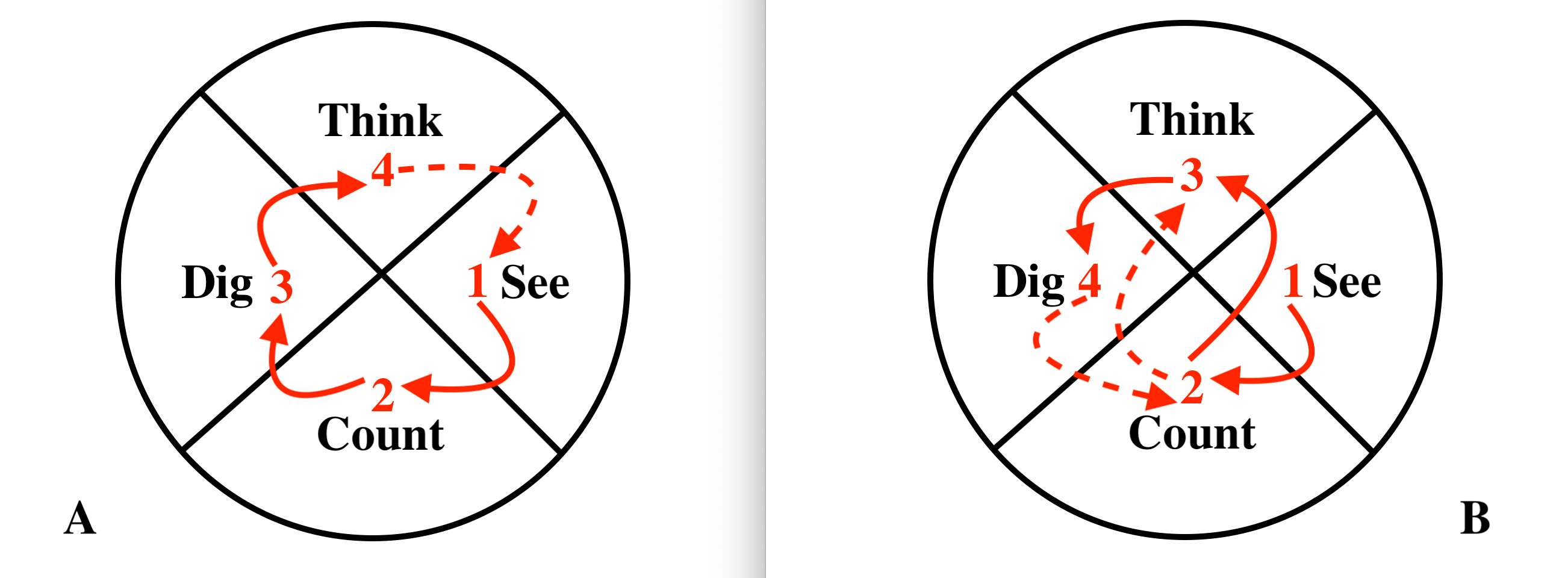
Figure 2----Diagrams illustrating archaeological activities at Blood Run National Historic Landmark (NHL). A) Late 1800s. B) Late 1900s.
Soon after settlers started finding artifacts at Blood Run NHL (“See”), people started opening the mounds (“Dig”) in search of “souvenirs” (Figure 2-A). Some of these people should be called “grave robbers” or “pot hunters”, but others were probably just doing it as outdoor recreation. I just recently saw a photo of people in the Ohio River Valley who were having a picnic while they were out “mounding”. Even though this “recreation” continued well into the 1900s in some areas, there’s now an increased understanding that this is disrespectful behavior that should not be tolerated. Going back to the late 1800s, several people recognized the importance of the mounds at Blood Run and conducted formal mapping surveys to document sizes and locations (“Count”). That work provided important information that fueled speculation (“Think”) about the Native American culture that produced the mounds.
By the late 1900s, archaeology had progressed to using a more “scientific” approach (Figure 2-B). The perspectives gained from clear descriptions of the artifacts (“See”) and more detailed mapping of the mounds (“Count”) provided guidelines on where to conduct careful excavations (“Dig”). This latest cycle of observations also produced more ideas (“Think”) about the indigenous cultures. And, like the megasites in Ukraine that led into another cycle of investigations (Figure 1-A). So, the sequence of activities is similar, but there are some distinct differences. At Blood Run many of the mounds had been violated by the early grave robbers and the only mapping is simple size and location. In contrast, the Ukraine megasites had geophysical investigations to guide the planning and location of excavations. Excavations at Blood Run have been mainly salvage operations as gravel pit mining has threatened archaeological features. Although there has been a recent proposal to do geophysical mapping of the geoglyphs in Good Earth State Park across the river in South Dakota, there have been essentially no modern geophysical investigations conducted in the Iowa portion of Blood Run NHL.
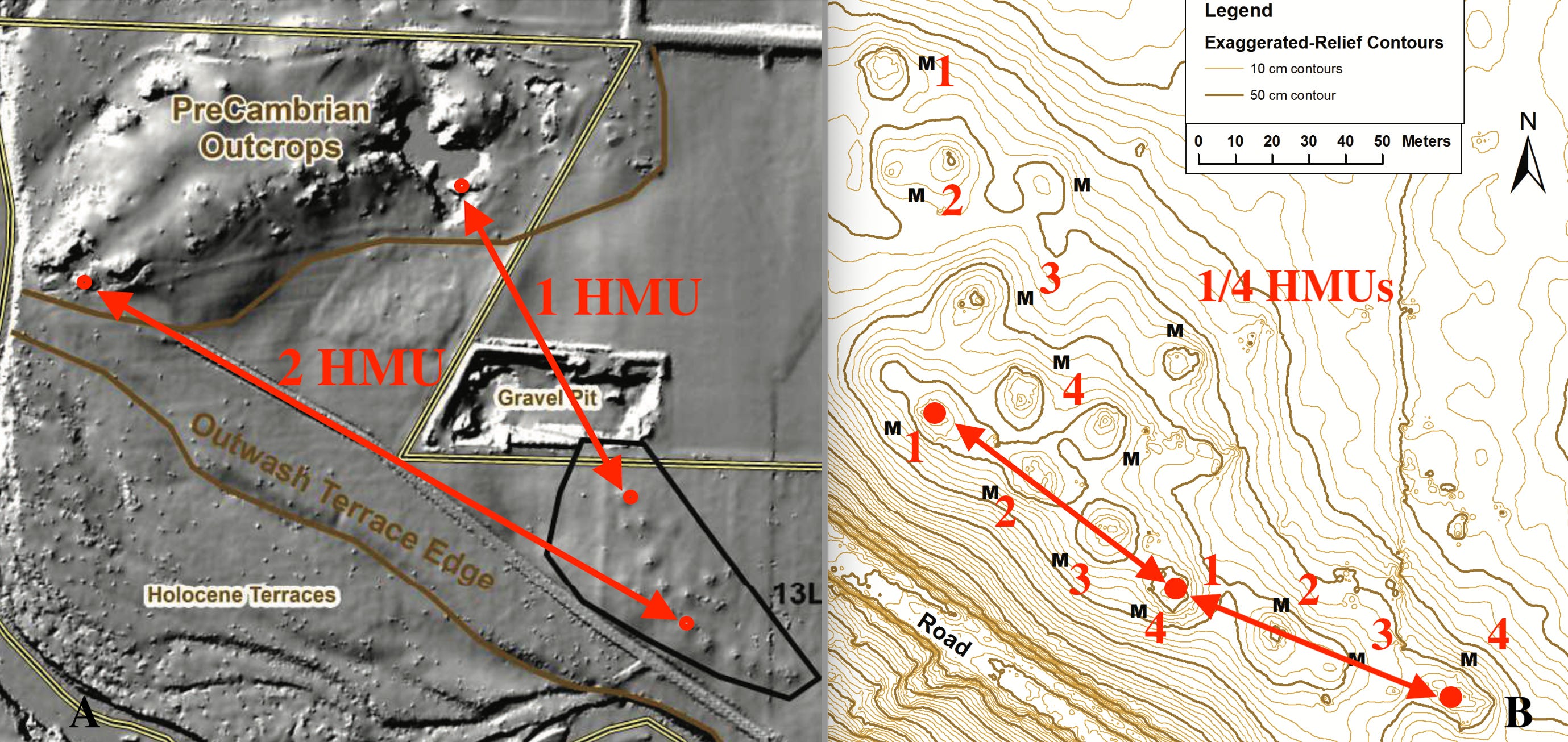
Figure 3---Examples of the Hopewell Measurement Unit (HMU) at Gitchie Manitou State Preserve in northwestern Iowa (Artz, 2014). A) LiDAR image of bedrock outcrops and aligned mounds. B) Elevation contours showing the details of the mound group.
Just north of Blood Run NHL there are outcrops of bedrock along the Big Sioux River that seem to have an alignment with two lines of mounds. We’ve already looked at the rocks, water, and plants in the Gitchie Manitou State Preserve, but the global tour provides some new perspectives. Earth structures in the Ohio River Valley incorporate a standard unit of measurement termed the “Hopewell Measurement Unit” (HMU) that has a value of 1,054 ft (321.3 m) (Romain, 2015). It appears that mounds at Gitchie Manitou show the same unit of measurement. The southwest end of the outcrop area is 2 HMU (643 m) from the center of one line of mounds and the northeast end is 1HMU (321.3 m) from the end of another line of mounds (Figure 3-A). That may reflect traditions that were shared with the Hopewell culture in the Ohio River Valley.
The possibility of shared cultural traditions is reenforced by measurements within one of the mound lines (Figure 3-B). Two segments are both ¼ HMU (80 m) long; however, the line of mounds trending toward the north doesn’t seem to conform with the HMU standard. The number “4” has cultural significance for the Siouan speakers who trace shared origins back to the Ohio River Valley. That includes the Dakota, Omaha, Ponca, and Ho Chunk Nations that are currently located along the Big Sioux River and adjacent parts of the Missouri River. A “Count” of mounds within the alignments shows three sets of 4 mounds, although there are also three mounds that don’t fit into the pattern of alignment (Figure 3-B). We need to apply this exercise of counting features and measuring distances to the mound groups at Blood Run NHL located a couple miles south of Gitchie Manitou State Preserve.
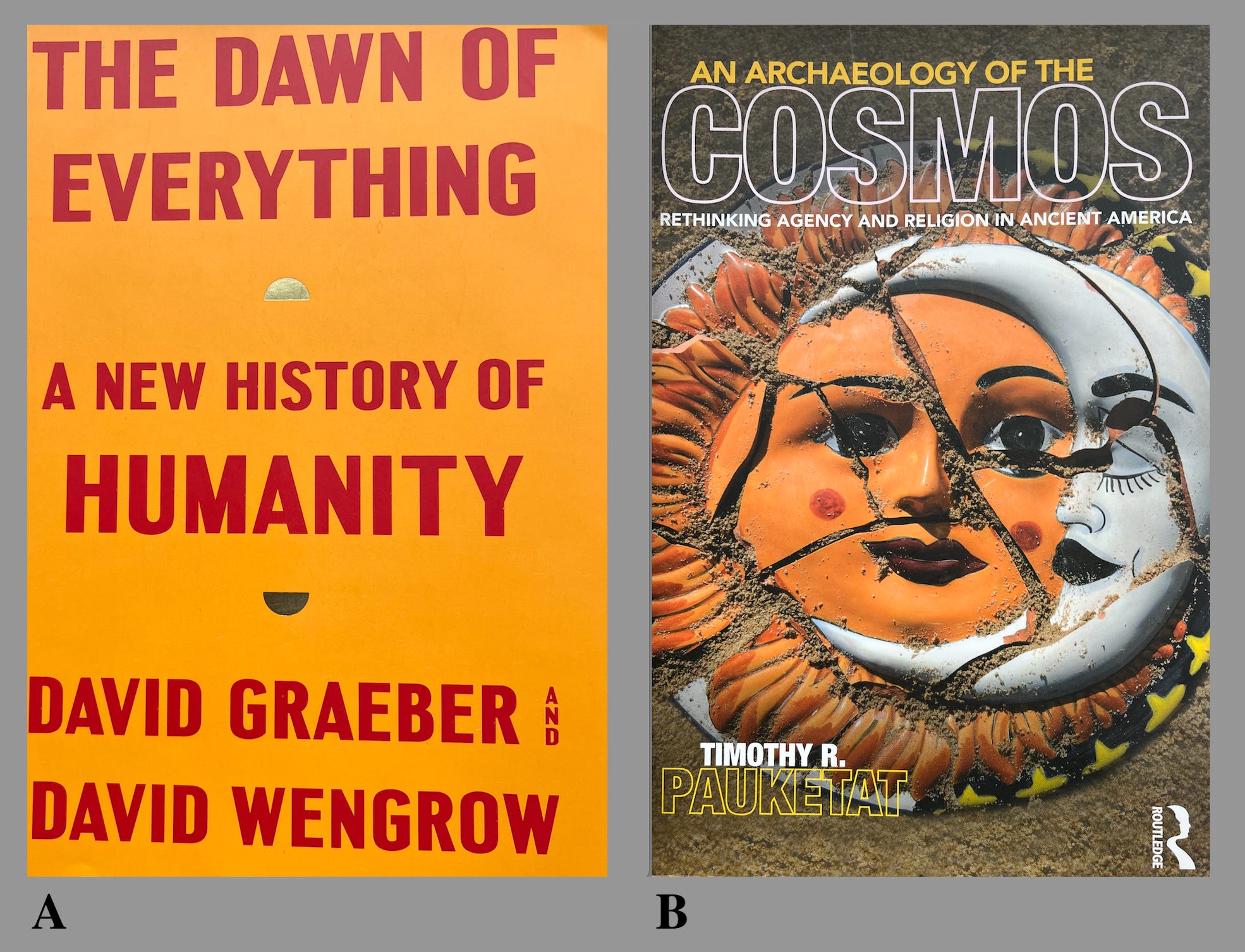
Figure 4----Books that include aspects of our world tour. A) “The Dawn of Everything” has discussions of the megasites in Ukraine, the Hopewell culture in the Ohio River Valley, and Cahokia in the Mississippi Valley. B) “An Archaeology of the Cosmos” focuses on Cahokia.
One of the things that I carried away from the world tour is the notion that our simplistic idea about social evolution is flat wrong. There’s a widely accepted standard sequence of “primitive” hunter/gatherer societies evolving into more “advanced” tribes and chiefdoms that in turn eventually become the complex cities and states at the top of the “developmental” pyramid. Although that primitive-to-complex model is engrained in lots of our thinking and even in our political philosophies, most of the people investigating human societies no longer believe that it’s true: “But if our fields have moved on, they have done so, it seems, without putting any alternative vision in place. As a result, almost anyone who is not an archaeologist or anthropologist tends to fall back on the older scheme when they set out to think or write about world history on a large canvas.” (Graeber and Wengrow, 2021, Figure 4-A) As a consequence, the way that we look at human history has the old social evolution sequence “baked into” most of our conversations.
For example, the Native American “city” of Cahokia with its cultural roots extending back into the Hopewell traditions, has been interpreted to be an expression of this sequence of primitive-to-complex social evolution that emphasizes warfare, trade, agriculture, and industrialization. However, in the last decade or so, new alternative ways of looking at social changes have been applied to Cahokia and other important archaeological sites in North America. Religion and human “agency”, which is the power to alter relationships and shape history, are more important than we usually realize (Pauketat, 2013, Figure 4-B). In fact, they may even be more important than the components of social evolution or even the constraints of the physical environment. This approach tends to deemphasize top-down administrative models and technical/industrial development. As a result, the perception that simple societies are primitive and complex societies are more advanced is downplayed and the cherished American myth of Manifest Destiny is called into question. Social evolution has played into our settlers’ sense of superiority.
But Native American cultural traditions are not “primitive” and they are not “dead”. The descendants of the people who built earth structures at Cahokia and Hopewell and the mounds at Gitchie Manitou and Blood Run can help us understand the language of the Land as it’s expressed in the rocks and water and plants. It will be easier to protect significant archaeological sites if we develop an innate sense of respect and acceptance for the cultures that are represented.
Fascinating as always. See- count - think - dig. Think before dig?